

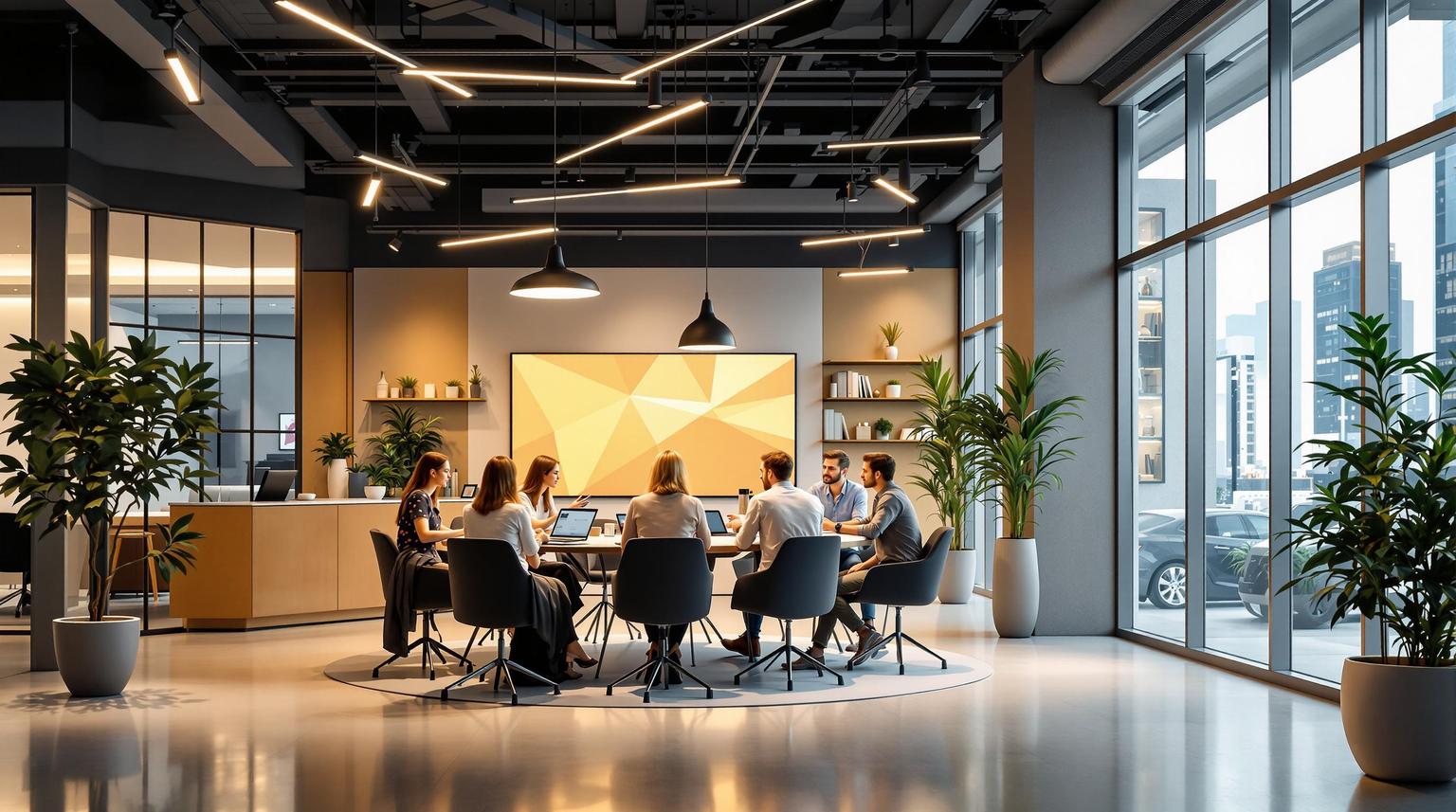

Lighting can account for up to 40% of energy use in commercial buildings. In offices, malls, factories, and hospitals, outdated systems waste electricity every day.
Smart lighting reduces that waste. With sensors, automation, and real-time controls, businesses cut energy bills, extend equipment lifespan, and improve system visibility.
This guide breaks down 7 proven lighting upgrades that reduce costs and support long-term operational efficiency.
Why Smart Lighting Matters for Energy Savings
Smart lighting systems do one thing well: they stop energy from being wasted.
They work automatically—adjusting brightness, turning off unused zones, and responding to daylight.
The result? Lower bills, less manual control, and better system efficiency.
Let’s look at 7 smart lighting solutions that make that happen.
7 Smart Lighting Solutions That Cut Commercial Energy Costs
1. Install Motion Sensors in Low-Traffic Areas
Motion sensors automatically switch off lights when no movement is detected.
They’re ideal for restrooms, stairwells, corridors, and storage rooms.
Why it works:
These areas—such as fire escape staircases in hotels or loading bays in warehouses—are used intermittently but often remain lit for hours.
Motion sensors reduce unnecessary runtime and lower electricity usage.
Savings:
Up to 30% lighting energy reduction in low-traffic zones.
2. Use Daylight Harvesting Sensors
Daylight harvesting sensors adjust artificial lighting based on natural light levels.
They dim or switch off lights when there’s enough sunlight.
Why it works:
Commercial spaces with glass façades—like office towers and co-working spaces—often over-light during the day.
Automated dimming prevents overconsumption.
Savings:
Reduces lighting load by 20–60% during daylight hours.
3. Retrofit with LED Lighting
LEDs consume less energy, produce less heat, and last longer than fluorescent or halogen lights.
Why it works:
LEDs convert energy to light more efficiently.
They’re already standard in retail chains, hospitals, and shopping malls, replacing older tube or CFL fixtures.
Savings:
LED retrofits can cut lighting energy use by up to 50%.
4. Integrate Lighting Control Systems (DALI, KNX)
Lighting control systems allow centralized scheduling, zoning, and dimming.
They support protocols like DALI, KNX, and BACnet.
Why it works:
Instead of manual switches, lighting responds to preset rules.
Systems like these are widely used in airports, high-end hotels, and commercial office buildings.
Savings:
Control systems optimize usage across large facilities, yielding 15–35% in energy savings.
5. Set Up Scheduled Lighting Automation
Scheduled automation turns lights on and off based on time or occupancy patterns.
It works without sensors and fits most office and retail environments.
Why it works:
Lights often remain on after hours in banks, law firms, and call centers.
Scheduled shutdowns ensure lights only operate when needed.
Savings:
Reduces overnight and idle-hour energy waste by up to 25%.
6. Use Smart Timers for Outdoor Lighting
Smart timers manage façade, parking, and signage lighting based on sunrise/sunset or operating hours.
Why it works:
Outdoor lights at supermarkets, petrol stations, and public car parks often stay on longer than needed.
Timers align usage with real-time conditions.
Savings:
Optimizing run times cuts outdoor lighting energy by 20–40%.
7. Monitor with Energy Analytics Dashboards
Smart dashboards visualize lighting energy usage, detect abnormal patterns, and generate reports.
Why it works:
Without data, it’s hard to detect inefficiencies.
Dashboards are now common in manufacturing plants, data centers, and large retail operations to guide lighting optimization.
Savings:
Continuous monitoring can surface hidden inefficiencies, improving savings across the entire system.
Summary Table: Smart Lighting Solutions at a Glance
Smart Lighting Solution | Where It's Used | Key Benefit | Estimated Savings |
|---|---|---|---|
Install Motion Sensors | Stairwells, restrooms, corridors, storage rooms | Turns off lights when no movement is detected | Up to 30% |
Use Daylight Harvesting Sensors | Offices with windows, co-working spaces, open-plan areas | Dims lights based on natural light | 20–60% during daylight |
Retrofit with LED Lighting | Retail chains, hospitals, shopping malls | Lower wattage and longer lifespan | Up to 50% |
Integrate Lighting Control Systems | Airports, hotels, large office buildings | Centralized control and automation | 15–35% |
Scheduled Lighting Automation | Offices, banks, law firms, call centers | Automatically turns off lights after hours | Up to 25% |
Smart Timers for Outdoor Lighting | Supermarkets, petrol stations, public car parks | Aligns lighting with actual usage times | 20–40% |
Energy Analytics Dashboards | Factories, data centers, retail HQs | Detects inefficiencies, tracks usage | Varies—system-wide savings |
How Much Can You Save with Smart Lighting?
Smart lighting upgrades can reduce a building’s lighting energy consumption by 20% to 60%, depending on the size, existing systems, and types of solutions implemented.
Here’s what the data shows:
Payback periods typically fall between 1 to 3 years, depending on the scale of installation and electricity tariffs.
Learn how to calculate your potential savings in detail in our guide to the ROI of sustainable lighting design.
Real-World Case Studies
Marina Bay Sands, Singapore implemented a full smart lighting upgrade—retrofitting LEDs, automating lighting zones, and adding occupancy sensors.
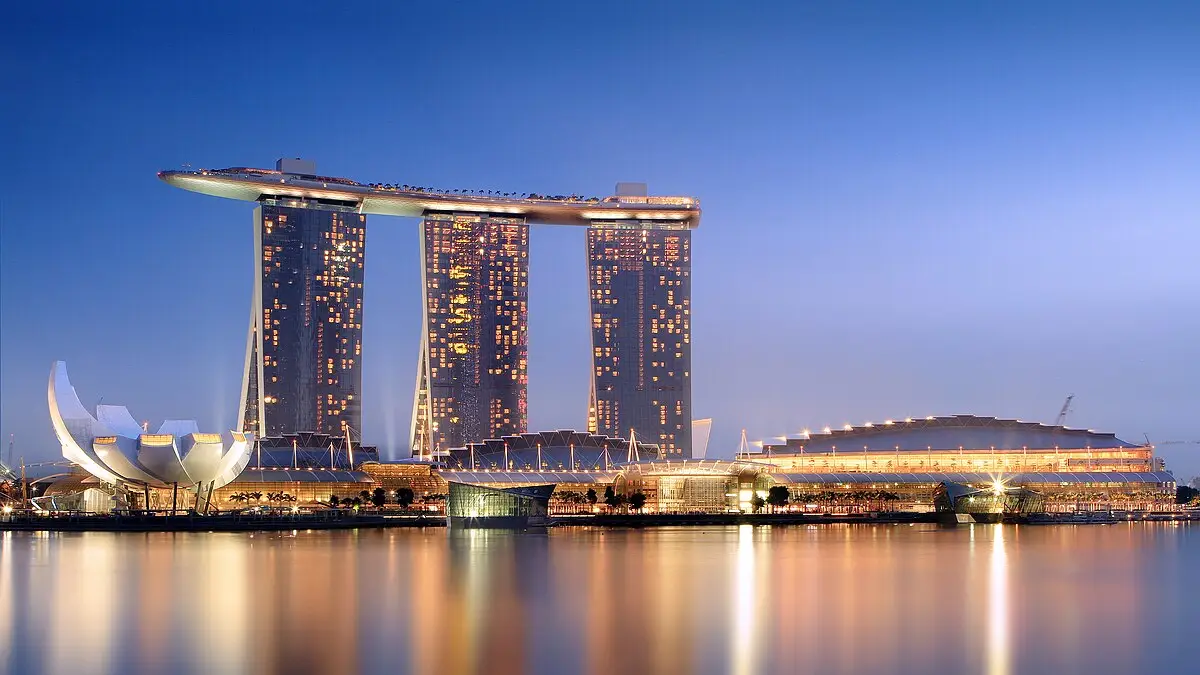
Result: Significant energy savings with a payback period of under 2 years (source).
Keppel Bay Tower, Singapore’s first super low-energy commercial building, reduced lighting energy usage by 30% by installing smart lighting systems and controls across office floors and common areas.

These results show that smart lighting isn’t just theoretical—it delivers measurable savings in real commercial environments.
Smart Lighting in Malaysia: A Growing Priority
Malaysian businesses face increasing pressure to lower energy consumption.
Electricity tariffs for commercial users have risen steadily, and sustainability reporting is no longer optional for larger corporations.
Smart lighting provides a practical way to meet these demands.
Here’s why adoption is accelerating:
Illustrative Example
Imagine a logistics hub in Shah Alam that replaces outdated fluorescent lights with motion-sensor LEDs in its warehouse and office zones.
With proper scheduling and sensor automation, the facility could cut lighting energy use by 20–30% within the first year—while qualifying for tax incentives under Malaysia’s Green Investment Tax Allowance (GITA).
Final Takeaway: Invest in Smart, Save Long-Term
Smart lighting is one of the simplest, most cost-effective ways to reduce commercial energy usage.
It’s scalable. It’s measurable. And it pays for itself—often in less than three years.
Whether you manage an office, hotel, retail chain, or warehouse, the right lighting system can lower your bills, extend asset lifespan, and help meet sustainability goals.
Start with one zone. Monitor the results. Expand from there.
Key Takeaways
- Smart lighting reduces commercial energy costs by 20–60%. From motion sensors to daylight harvesting, each solution targets waste directly.
- LED retrofits offer up to 50% savings alone. It's the fastest, most cost-effective upgrade with immediate impact.
- Automation and control systems optimize performance. Centralized systems like DALI and KNX reduce idle-time usage across zones.
- Outdoor lighting is often overlooked—but full of savings. Smart timers aligned with daylight cycles can cut 20–40% of unnecessary use.
- Monitoring matters. Energy dashboards detect inefficiencies and guide ongoing optimization.
- Payback periods typically fall between 1 to 3 years. Especially in high-usage buildings like malls, offices, and hospitals.
- Smart lighting supports ESG and compliance goals. Green Building Index (GBI) and MyHIJAU certifications recognize these upgrades.
- In Malaysia, smart lighting is no longer a luxury—it’s a baseline.
Local energy rates and reporting mandates are accelerating adoption.