

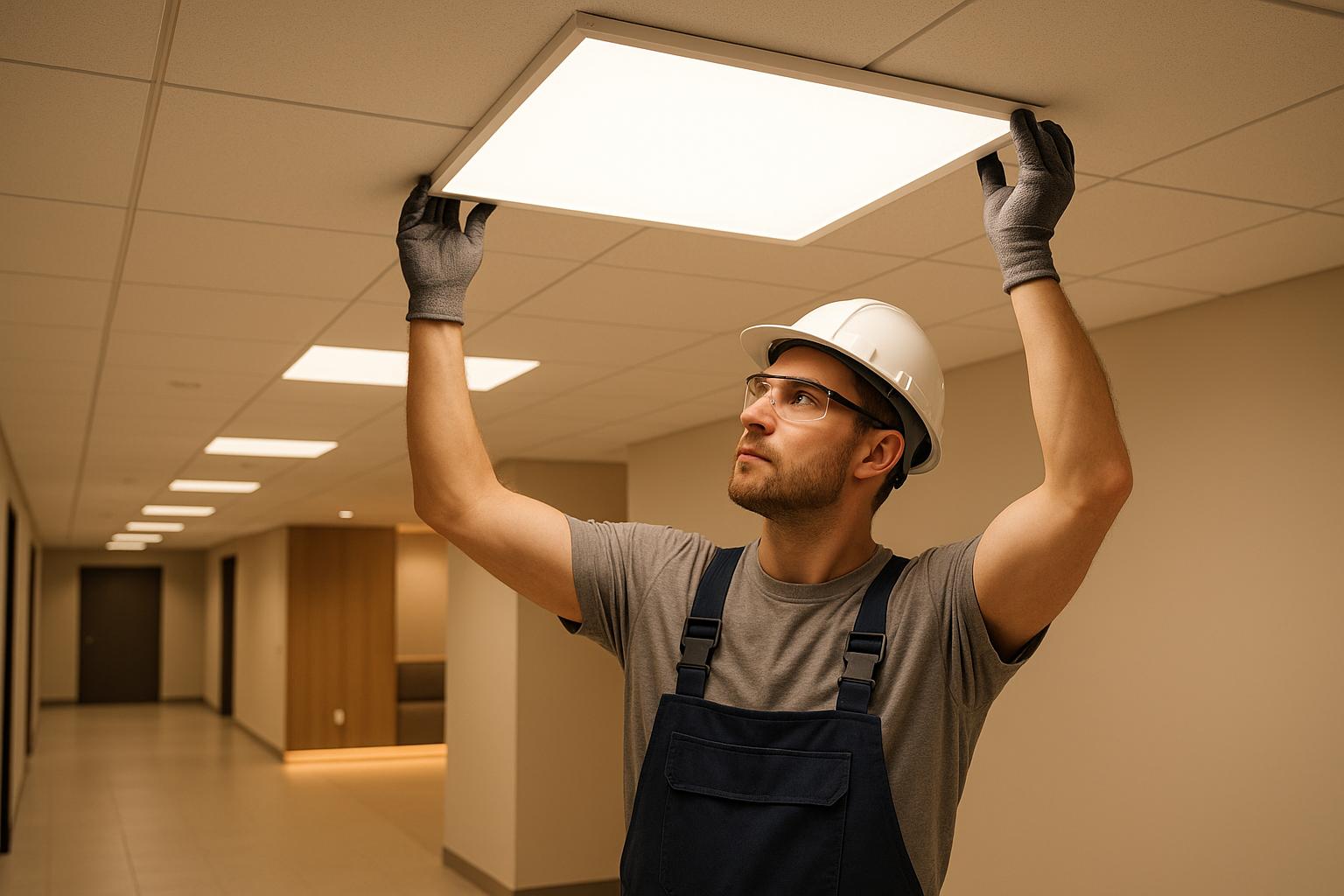

Smart lighting systems can reduce energy use by up to 75%, cut operational costs by 70%, and align with Malaysia’s growing focus on ESG compliance. Here’s a quick checklist to get started:
- Plan Ahead: Assess your facility’s lighting needs, energy consumption, and ESG goals.
- Check Compatibility: Inspect wiring, network connectivity, and existing systems for smooth integration.
- Choose the Right System: Opt for energy-efficient LEDs, motion sensors, and scalable smart controls.
- Follow Regulations: Ensure compliance with Malaysia’s Electricity Regulations 1994 and safety standards.
- Install Safely: Disconnect power, verify safety, and use proper tools and PPE.
- Test and Train: Configure smart controls, test systems, and train staff for efficient use.
- Maintain Regularly: Schedule cleanings, inspections, and upgrades for long-term performance.
Smart lighting doesn’t just save energy – it simplifies ESG reporting, enhances security, and supports sustainability goals. Start small, monitor performance, and expand as needed to maximise benefits.
How to Install a Smart Lighting System: Step-by-Step Guide
Pre-Installation Planning
Planning is the backbone of a successful smart lighting installation. By carefully assessing needs and preparing, you can ensure a smooth setup and long-term efficiency. Here’s how to approach it.
Assess Facility Needs and Goals
Start by evaluating your current lighting setup. Conduct an energy audit to understand your monthly energy consumption – this baseline will help measure potential savings and make a strong case to stakeholders.
In Malaysia, buildings account for 14.3% of total energy use, with 53% of electrical energy consumed by residential and commercial sectors. This highlights a huge opportunity to cut costs with smart lighting systems.
Observe lighting patterns in your facility at different times of the day to inform the design of your smart control system. For businesses in Malaysia, aligning with ESG (Environmental, Social, and Governance) goals is increasingly important. Record your lighting’s carbon footprint and set reduction targets. Automated ESG reporting features in smart lighting systems can help track progress and meet growing regulatory demands for transparency.
Take into account your facility’s operational schedule and occupancy patterns. Different zones may have unique requirements – manufacturing areas might need consistent brightness, while office spaces benefit from adjustable lighting throughout the day. Once you have a clear picture of your needs, move on to checking infrastructure compatibility.
Check Infrastructure Compatibility
Your existing electrical setup plays a crucial role in determining the right smart lighting solution. Start by inspecting the age and condition of your wiring. Many smart LED systems require a stable power supply and may need neutral wires for proper functioning.
Evaluate mounting points and ceiling structures. Smart lighting fixtures are often heavier than traditional ones, so you may need stronger mounting hardware. Measure ceiling heights and identify any obstacles, like HVAC ducts or beams, that could complicate installation.
Network connectivity is another critical factor. Check your facility’s Wi-Fi coverage, especially in areas where lighting controls will be installed. Weak signals can lead to unreliable performance.
Assess your electrical panel’s capacity to handle the additional load from smart controllers and sensors. While LEDs consume less energy, the added components may require dedicated circuits.
Finally, review any existing automation systems, such as HVAC, security, or fire safety. Integrating smart lighting with these systems can improve overall efficiency.
Choose Smart Lighting Solutions
Selecting the right components is key to meeting your facility’s needs. Energy-efficient LED fixtures are the heart of any smart lighting setup, offering substantial energy savings compared to older technologies.
Match control protocols to your facility’s size. Smaller spaces might benefit from simple Wi-Fi-based systems, while larger facilities often require robust protocols like Zigbee for reliable networking.
Choose sensors that align with usage patterns. Motion sensors are ideal for low-traffic areas like storage rooms, while daylight sensors optimise energy use in spaces with natural light.
Look for management software with features like real-time energy monitoring and automated ESG reporting. These tools provide valuable insights and help identify further optimisation opportunities.
Scalability is also worth considering. Opt for systems that can accommodate future expansions or integrate with other smart building technologies.
Compliance with Malaysian Regulations
Adhering to local regulations is essential for smart lighting installations in Malaysia. The Electricity Regulations 1994 (Amendment 2013) require electrical appliances to meet Minimum Energy Performance Standards (MEPS). LED lamps must comply with these standards, including criteria like efficacy, lumen maintenance, and failure rates.
Ensure your chosen LED products meet these requirements, with efficacy values and testing durations clearly displayed on their packaging. Additionally, systems that connect to the electrical grid or require new connections must comply with TNB technical requirements.
Certification standards are crucial for ensuring the quality and reliability of smart lighting systems under local conditions. Be sure to factor in safety codes and building regulations, as some installations may require permits or inspections, especially in commercial settings.
Create Installation Plan
Turn your planning and product selections into actionable steps with a detailed installation plan. Develop a timeline that accounts for equipment procurement, installation phases, and system commissioning. Align this schedule with your facility’s operations to minimise disruptions.
Budget planning should include not just the cost of equipment but also labour, possible electrical upgrades, and required permits. Smart lighting systems can reduce operational costs by up to 70% compared to traditional lighting, making the upfront investment more appealing.
For larger facilities, consider a phased rollout. Test the system’s performance in one area before expanding, which also helps spread costs over time.
Clearly define resource allocation. Determine which tasks require certified electricians and which can be handled by in-house staff. While some components are easy to install, electrical connections should always be managed by licensed professionals.
Prepare for potential challenges, such as outdated wiring or unexpected structural issues. Having contingency plans in place can prevent delays and cost overruns.
Finally, communicate effectively with facility occupants. Share the installation schedule, inform them about temporary disruptions, and explain the new system’s features. Good communication ensures a smoother transition and helps build support for the project.
Tools, Equipment, and Safety Requirements
Using the right tools and strictly adhering to safety protocols are essential for a smooth and safe smart lighting installation. These projects demand specific equipment and careful planning to meet safety standards.
Required Tools and Equipment
Start by gathering basic electrical tools like insulated screwdrivers, wire strippers, and pliers. Add specialised tools such as a multimeter to verify circuits. For mounting fixtures, have a cordless drill with proper drill bits, a spirit level to ensure alignment, and a measuring tape for precise positioning. Reliable step ladders or scaffolding that can handle the installer’s weight and equipment are also necessary.
Smart lighting setups often require additional tools. A network cable tester is vital for checking connections, while a mobile device with the manufacturer’s app helps with wireless configurations. Keep cable ties and conduits handy for tidy cable management.
Personal protective equipment (PPE) is non-negotiable. Ensure all gear meets DOSH–SIRIM standards, including helmets, safety glasses, non-slip boots, and insulated gloves. Have a first aid kit within reach, and use dust masks, lockout/tagout devices, or boom/scissor lifts as needed for specific tasks.
Once your tools are ready, perform a thorough safety check to confirm everything is in good working condition.
Pre-Installation Safety Checks
Before starting, inspect all tools and make sure electrical testers are properly calibrated to avoid errors. Check ladders and lifting equipment for damage, ensuring that locks and safety mechanisms are fully functional.
Test your multimeter on a known live circuit before using it to confirm power disconnection. Examine insulated tools for wear or damage to their protective coatings. Additionally, assess the workspace for hazards like wet floors, unstable surfaces, or overhead obstacles that might interfere with ladder placement. Adequate lighting is crucial, especially in dimly lit areas where installations may occur.
Emergency procedures should be clearly defined, and all team members must be familiar with them. Identify the main electrical disconnect point, and ensure someone trained in first aid is on-site during the installation.
Follow Local Safety Regulations
Once pre-installation checks are complete, enforce safety regulations to protect both workers and equipment during the project.
In Malaysia, the Occupational Safety and Health Act 1994 (Act 514) serves as the main legal framework for workplace safety during installations. This law outlines the duties of both employers and employees. Employers are required to provide appropriate PPE and ensure workers receive adequate training. Non-compliance can result in fines up to RM500,000 or imprisonment for up to two years under the amended regulations.
Follow lockout/tagout procedures carefully: turn off the main panel, secure and tag the breaker, and confirm the absence of power using a calibrated meter.
Employees must also do their part by using the provided safety equipment, adhering to protocols, and promptly reporting any hazards. For larger projects, hiring a registered Safety and Health Officer (SHO) can help ensure all safety measures align with local regulations.
Keep detailed safety records throughout the project. Document safety briefings, equipment inspections, and any incidents or near-misses. These records not only support compliance but also help improve safety procedures for future projects.
Step-by-Step Installation Checklist
With your tools ready and safety measures in place, it’s time to begin installing your smart lighting system. Following a structured process ensures everything is set up correctly and safely.
Power Disconnection and Safety Verification
The first and most important step is to completely disconnect the power from the circuits you’ll be working on. Never assume a circuit is de-energised without verifying it – this mistake has caused many preventable accidents.
Start by identifying the correct isolation point for the circuit. Turn off the circuit breaker and disconnect any secondary power sources, such as standby generators or UPS systems.
Before testing for voltage, inspect your voltage tester – whether it’s a test lamp or a two-pole voltage detector – to ensure it’s in good condition. Use it to confirm the circuit is not live. Then, re-test the voltage tester on a proving unit to ensure it’s still working properly.
Once you’ve confirmed the circuit is dead, secure it with a locking-off device at the isolation point, and post clear warning signs to prevent accidental re-energisation. Always prioritise working on a dead circuit whenever possible. If working on a live circuit is unavoidable, take all necessary precautions to ensure safety.
After verifying safety, you can move on to physically installing the LED fixtures.
Install LED Fixtures and Controllers
With power safely disconnected, you can now install the LED fixtures and smart controllers. This step requires careful attention, as proper installation affects both the performance and lifespan of your system.
Start by aligning and mounting the LED fixtures according to the manufacturer’s instructions. Use tools like a spirit level and measuring tape to ensure accurate placement and spacing. If your setup includes control zones for customised lighting, plan these zones carefully to suit your needs.
When mounting the fixtures, consider heat dissipation requirements. Although LEDs produce less heat than traditional lights, proper ventilation is essential for maximising their lifespan.
Next, install the smart controllers and sensors. Ensure each device has reliable network connectivity and evaluate the existing wiring and IT infrastructure to confirm compatibility with your smart lighting system. A modular installation approach is recommended to allow for future upgrades or expansions.
Set Up and Test Smart Control Systems
Once the fixtures and controllers are installed, it’s time to configure and test the smart control systems. This step integrates the individual components into a unified lighting network.
Begin by connecting all devices to the central management system. Configure control zones and test features like timers, sensors, and dimmers. Check the wireless connectivity between devices to ensure smooth communication with the central system. Comprehensive testing under different conditions – such as varying times of day and occupancy levels – helps identify any issues before the system goes live.
When all devices are functioning properly, proceed to the final inspection.
Final Safety and Functionality Inspections
The final step is to thoroughly inspect the system to ensure it meets safety standards and performs as intended.
Inspect the fixtures, wiring, and control systems using performance monitoring tools, and document your findings. Conduct a commissioning process to validate that the system meets energy efficiency and operational goals. This step ensures your smart lighting system delivers the expected benefits while maintaining safety throughout the facility.
Finally, document all test results and inspections. These records will serve as a reference for future maintenance and help monitor the system’s performance over time.
sbb-itb-f091f3d
System Integration and Setup
Once your lighting system is installed, the next step is to bring all the components together into a unified network. This stage is where individual parts become a cohesive system, managed and monitored efficiently from a central point, ensuring optimal energy use.
Set Up Centralised Management Systems
Centralised management simplifies control by consolidating all lighting operations into a single hub, typically located near the main breaker. This setup allows you to manage your lighting – dimming, switching, and more – using devices like smartphones, tablets, or wall-mounted touchpads.
Start by configuring the central gateway, which serves as the communication hub for sensors, controllers, and cloud platforms. Reliable network connectivity is essential for smooth operation, enabling both centralised control and remote monitoring.
Whenever possible, integrate your lighting system with existing building management systems (BMS). A BMS can bring together various building functions – lighting, HVAC, energy, water, and security – into a unified platform. This integration offers real-time data and analytics, simplifying operations and improving efficiency.
Automation plays a critical role here. For example, the system can adjust lighting based on occupancy levels in real time. Such systems have been shown to cut energy use by as much as 30%.
"This program is a win-win-win. It’s good for our employees, our customers, and the environment… From a sustainability standpoint, the LED installation allowed us to cut energy consumption by 50%; the Building Management System installation allowed us to reduce electricity and gas usage by 15% and water usage by 20%." – Mike Norton, Managing Director, Global Real Estate at JPMorgan Chase
Consider adding web-based dashboards to monitor real-time energy consumption, receive peak load alerts, and track solar energy input if applicable. These dashboards enable facility managers to make adjustments and monitor usage from anywhere. Once the central control is in place, you can move on to automating ESG reporting for streamlined management.
Enable Automated ESG and Energy Reporting
With an increasing focus on ESG (Environmental, Social, and Governance) transparency in Malaysia, automated reporting has become a vital feature for smart lighting systems. These systems can track energy consumption, lighting schedules, HVAC, and even solar energy generation in real time.
Set up your system to log energy data for carbon tracking, audits, and ESG reporting. This helps identify inefficiencies, automate schedules, and reduce your carbon footprint while simplifying reporting for ESG compliance or funding purposes.
Using ESG reporting software can further streamline the process, automating data collection, management, and disclosures. AI-powered solutions can enhance accuracy and save time by reducing manual input and minimising errors.
A 2022 Gartner report highlighted the benefits of effective ESG execution, noting that it can cut operating costs by up to 60%. However, accuracy is paramount in data collection.
"If you collect the wrong data and source, you increase your chance of misstatements in your public report. That is the biggest challenge." – Phang Oy Cheng, Head of Sustainability Advisory Services, KPMG Malaysia
Ensure your system is designed to collect, clean, and standardise ESG data across the organisation. Define clear objectives for your ESG reporting, involve key stakeholders, and continuously refine your practices to maintain accuracy and relevance.
Adjust Sensor and Schedule Settings
Fine-tuning your system’s sensors and schedules is where the most noticeable energy savings can be achieved. Smart lighting systems have been shown to cut lighting costs by 35% to 70%, but this requires proper configuration.
- Motion Sensors: Set these to detect movement and activate lights only when needed.
- Daylight Sensors: Adjust lighting levels based on natural light to reduce unnecessary usage.
- PIR and HF Sensors: Use these to dynamically adjust brightness based on occupancy, potentially lowering energy use by 20% to 40%.
Create automated zones tailored to different areas of your facility. For instance, offices, hallways, and meeting rooms all have unique lighting needs. Program time-based schedules that align with operating hours and natural light availability to further optimise energy use.
For added security, configure lights to mimic occupancy when the building is empty. Once these settings are in place, ensure your staff is trained to operate the system effectively.
Train Facility Staff
Even the most advanced lighting system is only as effective as the people managing it. Proper training ensures your investment delivers long-term benefits.
Train staff on the basics of system operation, such as using the centralised interface, adjusting schedules, and responding to alerts. Teach them to access and interpret real-time energy data for better decision-making.
Provide troubleshooting guidelines for common issues like connectivity problems or device resets. Staff should also know when to escalate issues to technical support.
Include maintenance training as part of the programme. While predictive maintenance can lower overall costs by up to 20% and extend equipment life by 10-15%, staff still need to handle routine tasks and understand maintenance schedules.
Make sure personnel are familiar with ESG reporting features. Since 74% of companies still rely on manual spreadsheets for sustainability reporting, your automated system offers a major advantage – provided staff know how to use it.
"Through digitisation and digitalisation, we can now enable ownership and accountability in all the workflows, because after all, ESG is not a one-man job. There should be ownership not just from one person or one team but across the entire organisation." – Katherine Pamintuan, ESG Manager, Convene ESG
Create user-friendly manuals and quick reference guides for easy access. Schedule regular refresher sessions to keep staff up to date on system features and updates.
Maintenance and Long-Term Performance
Keeping your smart lighting system in top shape is key to ensuring consistent energy savings and smooth operation. Regular maintenance, as highlighted in our installation checklist, plays a crucial role in maintaining system efficiency and reliability over time.
Set Up Regular Maintenance Routines
A structured maintenance schedule is the backbone of a reliable smart lighting system. Without it, even the most advanced systems can falter in performance.
- Weekly tasks: Clean fixtures to enhance light output – this simple step can boost output by up to 30%. Also, test control systems like motion sensors, dimmers, and automated schedules to catch minor issues before they escalate.
- Monthly checks: Inspect components like ballasts, drivers, and connections for wear or damage. Adjust lighting levels to reflect seasonal or operational changes.
- Quarterly reviews: Replace groups of lamps on a schedule rather than waiting for individual failures. This approach ensures consistent lighting and avoids unplanned outages. Additionally, review energy data to identify optimisation opportunities.
- Annual audits: Perform a comprehensive evaluation of your system. Use this time to plan upgrades or replacements to keep up with evolving needs.
| Frequency | Task |
|---|---|
| Weekly | Clean fixtures and lamps; inspect and test control systems |
| Monthly | Check electrical components; adjust lighting levels |
| Quarterly | Conduct group relamping; review energy data |
| Annually | Comprehensive system audit; plan upgrades/replacements |
Once your routine is in place, monitor the system closely to catch potential problems early.
Monitor System Performance
Smart lighting systems generate valuable data that can help you fine-tune performance and prevent issues. Detailed energy consumption reports allow facility managers to pinpoint areas for improvement.
- Real-time monitoring: A centralised management system provides live insights into energy use, performance, and anomalies. Modern smart lighting systems can cut energy consumption by up to 60%, but this requires ongoing monitoring and adjustments.
- Integrated systems: When your lighting communicates with other building systems, it can automatically adjust based on occupancy, weather, or schedules. This integration enables predictive maintenance and smarter energy use.
- Performance analytics: Analyse energy trends to identify areas with unexpectedly high usage, which could indicate issues like fixture degradation or faulty controls. IoT sensors can add another layer of insight, monitoring environmental factors like space utilisation and airflow for further energy efficiency.
Set up automated alerts to flag unusual energy consumption or maintenance needs, ensuring problems are addressed before they escalate.
Plan Regular Audits and Upgrades
Technology evolves quickly, and regular audits ensure your smart lighting system remains efficient and aligned with sustainability goals.
- Energy audits: Annual audits measure current energy use and establish baselines for Scope 2 emissions reporting. Lighting accounts for nearly 20% of electricity consumption, making it a significant factor in overall energy efficiency.
- Upgrades: New technologies can reduce energy use significantly. For instance, LED lights consume at least 50% less energy than fluorescent or halogen options, and adding features like motion sensors or daylight harvesting can cut usage by an additional 20–30%.
- ESG compliance: Regular reviews ensure your system supports sustainability reporting. Smart lighting systems generate trackable data, simplifying ESG reporting and ensuring your organisation meets its goals.
Beyond energy savings, lighting upgrades can also improve workplace productivity and safety. Studies show that well-lit environments can boost employee alertness and performance by up to 15%, while also reducing potential injury risks.
When planning upgrades, align them with specific targets, such as reducing lighting-related energy use by a set percentage within a given timeframe. This ensures your system continues to contribute meaningfully to your organisation’s goals.
Document Processes for Future Reference
Thorough documentation is essential for maintaining system performance and ensuring smooth transitions when staff changes occur.
- Maintenance logs: Record routine activities, including dates, tasks, and observations. This helps identify recurring issues and optimise schedules.
- Performance records: Track energy consumption, efficiency metrics, and operational changes. These records support ESG reporting and highlight the value of your smart lighting investment.
- Configuration details: Document sensor settings, schedules, and integrations to retain critical knowledge for troubleshooting or training new staff.
- Upgrade records: Keep detailed notes on system changes, including the reasons, expected outcomes, and actual results. This information will guide future decisions.
Also, maintain easily accessible vendor and warranty information, such as technical support contacts and service agreements. Quick access to this information can minimise downtime when problems arise.
Partnering with a commercial lighting manufacturer can provide expert guidance on maintenance, system optimisation, and upgrades. This professional support ensures your lighting system delivers maximum value throughout its lifespan.
Conclusion
Setting up smart lighting systems requires careful planning, proper execution, and consistent maintenance to achieve the best energy savings and meet regulatory standards in Malaysia.
Thorough pre-installation planning is key – this includes assessing the specific needs of your facility and ensuring compliance with local regulations. By doing so, you not only optimise performance and safety but also make a sound investment. Studies have shown that energy-efficient lighting can lead to significant reductions in operational costs.
Regular maintenance and real-time monitoring are equally important. They help maintain system performance over time and ensure alignment with ESG (Environmental, Social, and Governance) goals. These practices collectively establish a strong framework for managing facilities in a sustainable way.
FAQs
What are the main advantages of connecting smart lighting systems to your building management system?
Integrating smart lighting systems with your building management system brings a range of advantages. For starters, it helps cut electricity costs by automatically adjusting lighting based on how spaces are being used and the amount of natural light available. This not only saves money but also boosts energy efficiency.
On top of that, it enhances comfort and security for occupants. Features like motion detection ensure spaces are well-lit when needed, creating a safer and more pleasant environment. Plus, integrating smart lighting with other building systems allows everything to work together seamlessly, improving overall operations and supporting a greener, more efficient facility.
How do smart lighting systems support ESG compliance and sustainability reporting in Malaysia?
Smart lighting systems are an important asset for ESG compliance and sustainability reporting in Malaysia. With their ability to provide real-time energy monitoring, businesses can closely track and manage their energy consumption, directly addressing Scope 2 emissions – a critical focus in sustainability initiatives.
These systems also deliver precise and measurable data that align seamlessly with recognised frameworks such as GRI 302, Bursa Malaysia’s Sustainability Reporting Guide, and the GHG Protocol. By adopting smart lighting, companies can meet regulatory expectations while improving the transparency of their ESG reporting.
On top of that, smart lighting solutions present a practical and cost-efficient way to upgrade facilities, helping businesses achieve their sustainability targets more effectively. They’ve become a key component in shaping ESG strategies across Malaysia.
What challenges can arise during the installation of smart lighting systems, and how can they be resolved?
Installing smart lighting systems isn’t always straightforward, especially in older buildings. These structures often require wiring upgrades, which can drive up labour costs and make the installation more complicated. On top of that, integration issues like software bugs or connectivity hiccups can impact how well the system works.
To navigate these hurdles, it’s a good idea to bring in professional installers who understand the local infrastructure and regulations. Make sure your facility has a reliable Wi-Fi connection and opt for systems known for dependable software support. Careful planning, choosing compatible, high-quality components, and running thorough tests before rolling out the system fully can make the process smoother and help avoid unnecessary disruptions.