

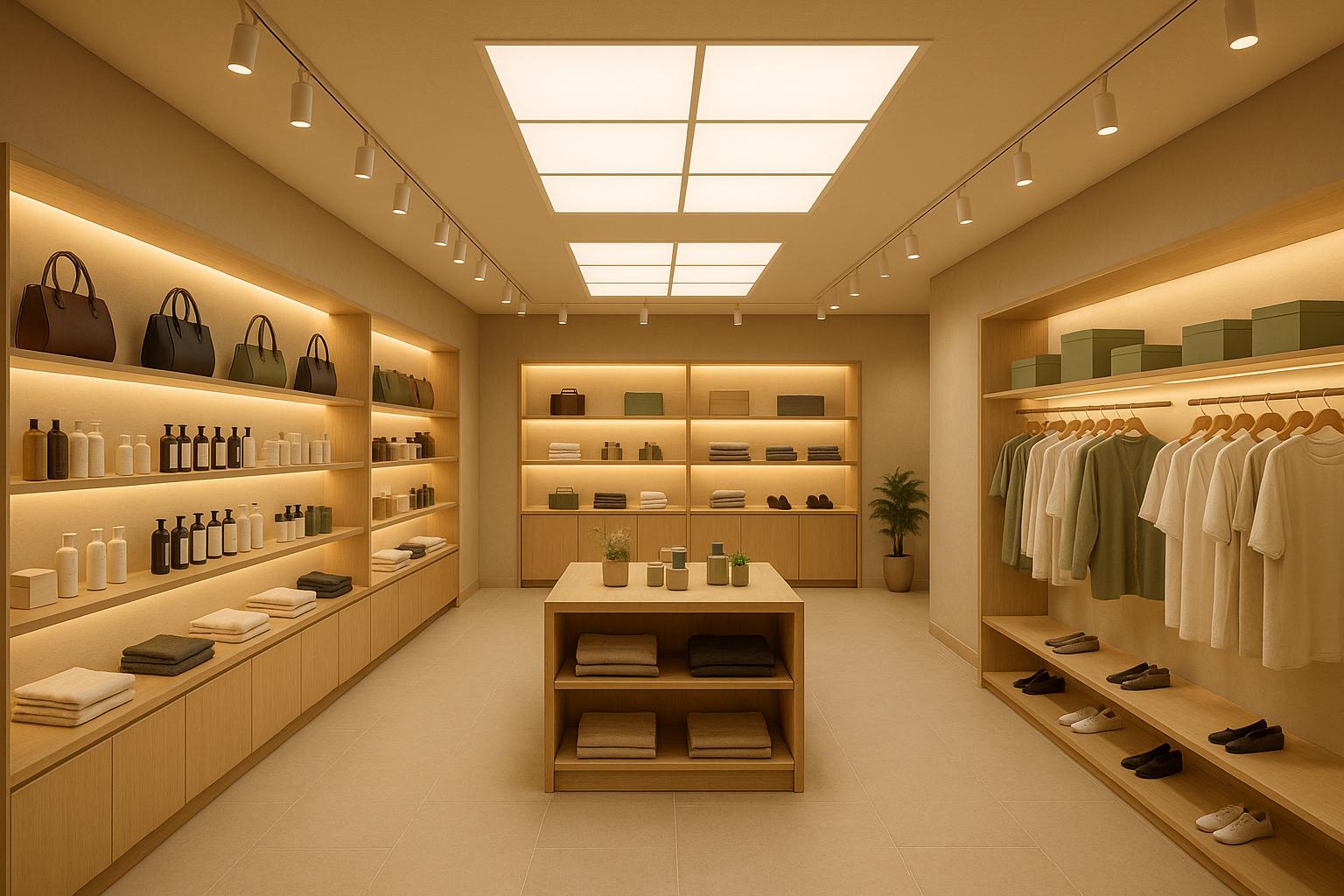

Cut your electricity bills by up to 60% with energy-efficient lighting. Switching to LED lighting and adopting smart controls can reduce costs, enhance your retail space, and support Malaysia’s sustainability goals. Here’s what you need to know:
- Switch to LEDs: Save up to 75% on electricity and reduce maintenance with bulbs that last 25 times longer.
- Install smart controls: Use occupancy and daylight sensors to optimise lighting based on movement and natural light.
- Leverage natural light: Maximise Malaysia’s abundant sunlight with windows, skylights, and light-reflecting surfaces.
- Zone and layer lighting: Tailor brightness levels for different areas like entrances, displays, and storage spaces.
- Conduct energy audits: Identify inefficiencies and comply with Malaysia’s Energy Efficiency and Conservation Act (EECA) 2024.
Quick Comparison:
| Feature | Benefit | Example in Malaysia |
|---|---|---|
| LED Lighting | 50–90% energy savings | Replacing 60W bulbs with 10W LEDs |
| Smart Controls | Automated adjustments, up to 90% savings | Occupancy sensors in fitting rooms |
| Natural Light | Free lighting, reduced cooling costs | Skylights with UV-blocking films |
| Energy Audits | Up to 30% savings | Required under EECA 2024 |
Start small with LEDs and sensors, then expand with smart systems and audits for long-term savings. These steps are cost-effective, eco-friendly, and align with Malaysia’s green incentives.
Lighting Explained: Episode 4 Retail Lighting
Choosing LED Lighting Solutions
Picking the right LED lighting for your retail space involves more than just selecting bulbs – it’s about understanding how performance impacts energy costs, maintenance, and the overall shopping experience. Let’s break down the essentials to help you choose the best solutions for your store.
Key Features of Efficient LED Lighting
When assessing LED lighting, focus on performance and quality. Pay attention to lumens per watt, which measures energy efficiency, and the Colour Rendering Index (CRI), which ensures your products look true to life under the lighting. High-quality LEDs typically last between 25,000 and 50,000 hours – far outlasting incandescent bulbs, which only offer around 1,000 hours of use. That means even with a 12-hour daily operating schedule, LEDs can serve you reliably for years.
LEDs also come in a variety of colour temperatures, giving you the flexibility to create the perfect atmosphere. For instance, warm white tones can make your store feel inviting, while cooler white tones deliver a sleek, modern vibe. This adaptability allows you to align your lighting with your brand identity and store design.
LED vs Traditional Lighting
The gap between LED and traditional lighting is massive. LEDs consume 50–90% less energy than conventional bulbs. For example, a 10W LED bulb can replace a 60W incandescent, slashing your energy use significantly.
Maintenance is another area where LEDs shine. With lifespans that far exceed traditional bulbs, they reduce how often you need replacements, cutting both hassle and costs.
Heat output is especially important in Malaysia’s warm climate. Incandescent bulbs release up to 90% of their energy as heat, and compact fluorescents emit about 80% as heat. LEDs, on the other hand, produce much less heat, which can lighten the load on your air conditioning system. Additionally, LEDs provide directional light, eliminating the need for extra reflectors and minimising wasted energy.
"LED lamps have high luminous efficiency and provide an easier recycling procedure that is less harmful to the environment than other technologies, they will help to mitigate environmental degradation and natural resources depletion." – Khorasanizadeh et al.
These features make LEDs a standout choice, especially when considering local regulations and preferences.
Local Considerations for Malaysian Retailers
For Malaysian retailers, understanding both technical details and local needs is crucial. The Energy Efficiency and Conservation Act (EECA) 2024 sets performance standards for buildings. Retailers may need to appoint Registered Energy Managers and conduct energy audits by certified auditors. Upgrading to LED lighting not only helps meet these requirements but also supports long-term cost savings.
While the upfront cost of LEDs is higher than traditional options, their long lifespan and reduced energy use often result in a payback period of just 1–3 years. Plus, their lower heat output helps maintain a more comfortable indoor environment, reducing cooling demands during Malaysia’s hot and humid months.
Cultural preferences also influence lighting choices. Many retailers in Malaysia prefer warmer tones to create a cosy atmosphere in food and beverage outlets or traditional markets. Conversely, electronics stores and other modern retail formats often opt for cooler lighting to convey precision and cleanliness.
Designing Efficient Lighting Layouts
Create an effective lighting layout by carefully planning fixture placement, making the most of natural light, and adhering to local regulations. This not only cuts energy costs but also improves the overall customer experience.
Planning Effective Lighting Layouts
Good lighting design begins with understanding your space and how people interact with it. Start by zoning your retail area based on different functions and their lighting needs. For example, high-traffic areas like entrances and checkout counters benefit from brighter lighting, while storage or back-office spaces can use lower-intensity fixtures.
To avoid dark spots and wasted energy, position fixtures evenly across the space. For general retail areas, aim for lighting levels between 300–500 lux for a comfortable shopping experience. For product displays, accent lighting with levels between 1,000–3,000 lux works best.
Fixture height and angle also play a big role in efficiency. Lights placed too high waste energy by illuminating unused areas, while fixtures mounted too low can cause glare and shadows. A good rule of thumb is to install LED panels or track lighting at a height of 2.5–3 metres for optimal coverage.
Layered lighting is another key strategy. Combine ambient lighting for overall illumination, task lighting for specific areas like fitting rooms, and accent lighting to highlight key products. This layered approach adds depth and allows you to adjust brightness based on the time of day or customer traffic.
Once these strategies are in place, you can incorporate natural light for even greater energy savings.
Using Daylight for Energy Savings
Malaysia’s abundant natural light offers a great opportunity to reduce energy usage. Properly placed and sized windows can direct sunlight to critical areas like walkways and product displays. To make the most of this free resource, ensure that shelving and fixtures don’t block the light.
Light shelves are particularly effective in Malaysia’s climate. These horizontal surfaces reflect sunlight upward to brighten ceilings, reducing glare and allowing light to penetrate further into the space. Pairing these with light-coloured walls and window sills enhances the distribution of natural light.
A great example of this is the Pavilion Damansara Heights Mall in Kuala Lumpur. Its Crown lighting facade uses curved cladding as a sunshade while allowing natural light to flood the interior. Over 2,500 hand-blown glass ornaments in the facade reflect sunlight, creating a subtle sparkle throughout the day without relying on LED systems. This design achieves 400 lux at floor level, balancing natural and artificial light effectively.
Skylights are another excellent way to bring in natural light, especially for larger retail spaces. Horizontal skylights work better than vertical ones in urban settings. For Malaysia’s tropical climate, use laminated double-glazed skylights with low-emissivity coatings to reduce heat gain while maximising light transmission.
Meeting Malaysian Energy Standards
Efficient lighting layouts that optimise natural light and fixture placement not only save money but also help comply with Malaysia’s energy regulations. The Energy Commission of Malaysia oversees these standards, focusing on commercial buildings, which account for 66% of energy consumption in the sector.
To prepare for upcoming EECA standards, start by documenting your current energy usage and establishing a baseline. This data will help you measure improvements and demonstrate compliance with future regulations.
Centralised lighting management systems can make it easier to meet these standards. These systems provide real-time energy monitoring and automated reports, aligning with ESG goals and regulatory requirements.
Regular maintenance is also essential to keep your system running efficiently. Clean fixtures, replace outdated components, and recalibrate sensors as needed. This proactive approach ensures your lighting system maintains its performance and stays compliant with Malaysian energy standards over the long term.
Smart Lighting Control Systems
Smart lighting control systems are transforming the way retail spaces manage energy and operations. By integrating LED technology, sensors, and centralised management, these systems optimise energy consumption while cutting costs. They combine automation with real-time monitoring to create lighting environments that adapt seamlessly to changing conditions.
Features of Smart Lighting Controls
Modern smart lighting systems come with three standout features: occupancy sensors, daylight sensors, and centralised management systems. These tools work together to ensure lighting is efficient and responsive to the needs of the space.
- Occupancy sensors: These adjust lighting based on movement, making them ideal for areas like fitting rooms or storage spaces where foot traffic varies.
- Daylight sensors: These measure natural light levels and adjust artificial lighting accordingly. In Malaysia, where tropical weather brings fluctuating sunlight throughout the day, these sensors help balance brightness – reducing energy use during sunny periods and providing adequate light on cloudy days or in the evening.
- Centralised management systems: These allow retailers to monitor and control all lighting from a single interface. They provide real-time insights into energy usage, fixture performance, and maintenance needs. Additionally, these systems can connect with security, HVAC, and point-of-sale systems, creating a fully automated retail environment that adapts to customer patterns and operational demands.
Reducing Costs with Automation and Monitoring
Automation is a game-changer when it comes to cutting costs. By using automated scheduling, lights operate only when needed and at the ideal intensity levels. This reduces unnecessary energy consumption.
Real-time monitoring takes it a step further by analysing usage patterns and identifying areas for improvement. For example, Justlight Concept‘s energy management systems not only track energy consumption but also generate automated ESG reports. These reports help retailers showcase their sustainability efforts to stakeholders while ensuring compliance with Malaysia’s energy regulations.
Predictive maintenance is another key benefit. By continuously monitoring LED performance, the system can flag potential issues before they lead to expensive repairs. This proactive approach extends the lifespan of lighting fixtures and ensures consistent performance.
David Buerer, director of product management for Leviton Lighting & Energy Solutions, highlights the impact of these systems: "Smart lighting systems offer substantial savings in energy and maintenance costs, with estimates showing up to a 90 percent reduction in lighting energy consumption and a 30 percent to 70 percent cut in overall lighting expenses".
Applications for Malaysian Retailers
Smart lighting systems are particularly well-suited to Malaysia’s diverse retail environments. Sensors with detection ranges of 8–12 metres for large retail floors and 3–5 metres for smaller spaces ensure tailored coverage. Additionally, these systems operate effectively in temperatures ranging from 18°C to 35°C, making them reliable in Malaysia’s climate.
Colour temperature automation is another feature that enhances both energy efficiency and customer experience. For instance, systems can transition from 4,000K daylight-balanced lighting during busy daytime hours to a warmer 3,000K tone in the evening, creating a welcoming atmosphere.
Connectivity options, including Wi-Fi and Bluetooth, add flexibility to accommodate various store layouts. However, retailers should account for building materials like concrete or steel, which may require mesh networking or additional access points to maintain strong communication across the space.
The adoption of smart lighting in Malaysia is on the rise, with the market projected to reach USD 29.46 billion by 2033. Government incentives, like the Green Technology Financing Scheme (GTFS) and tax rebates for energy-efficient upgrades, further support retailers in adopting these technologies. These measures make smart lighting systems a feasible investment for businesses of all sizes.
sbb-itb-f091f3d
10 Energy-Efficient Lighting Tips for Retail Spaces
Here are ten practical tips for Malaysian retailers to improve energy efficiency and reduce costs through smarter lighting choices.
Switch to High-Efficiency LED Bulbs
LED bulbs are a game-changer when it comes to energy savings. They use up to 75% less electricity and last up to 25 times longer than traditional incandescent bulbs. With energy conversion rates of 40–50% (compared to just 10–20% for incandescent lamps), LEDs are a smart investment for any retail space.
In Malaysia, where lighting accounts for about 30% of electricity usage in buildings, switching to LEDs can lead to significant cost reductions. Plus, with the government prioritising LED manufacturing, high-quality options are widely available for local businesses. When shopping for LEDs, consider models that provide instant brightness, unlike sodium lights that take 15–20 minutes to reach full output.
Install Occupancy Sensors
Pairing LEDs with occupancy sensors adds another layer of efficiency. These sensors use PIR or microwave technology to detect movement and adjust lighting automatically. They are particularly useful in spaces with fluctuating foot traffic, such as storage rooms, fitting areas, and employee zones.
Use More Daylight
Malaysia’s sunny climate is perfect for making the most of natural light. Arrange displays near windows or glass storefronts to brighten your space without relying on artificial lighting. Light-coloured walls and mirrors can help reflect daylight further into your store. If you’re planning renovations, think about adding skylights or larger windows for even more natural light. To manage heat and glare, use UV-blocking window films or blinds.
Use Dimmer Controls
Dimmers allow you to adjust lighting levels to suit different times of the day or customer moods. Reducing light intensity by 25% can save up to 20% in energy. Use brighter settings during peak hours and softer lighting during quieter periods to create the right atmosphere while saving energy.
Schedule Regular Maintenance
Keeping your lighting system in top shape is essential. Regularly clean fixtures, replace burnt-out bulbs, and recalibrate sensors to maintain efficiency. A well-maintained system not only saves energy but also prevents small issues from turning into costly problems.
Use Centralised Control Systems
Centralised systems like Justlight Concept’s energy management solutions can simplify lighting control. They monitor energy use, generate automated reports, and even flag potential problems for predictive maintenance. These systems can also integrate with security, HVAC, and point-of-sale systems, creating a seamless and efficient retail environment.
Choose the Right Lighting Colours and Temperatures
The colour and temperature of your lighting can influence both energy efficiency and customer experience. Measured in Kelvin (K), lighting temperatures can be tailored to different areas of your store:
- General retail areas: 4,000K for a daylight-balanced, vibrant look during busy hours.
- Evening settings: 3,000K for a warmer, more inviting atmosphere.
- Task areas (e.g., checkout counters): 5,000K–6,500K for better visibility.
- Relaxation zones or premium displays: 2,700K–3,000K for a cosy, luxurious feel.
Zone Lighting for Energy Efficiency
Divide your store into zones – entrances, main floors, fitting rooms, storage areas, and checkout counters – and control each zone separately. This method ensures that high-traffic areas remain well-lit while less-used spaces can operate on lower settings, optimising energy use.
Perform Regular Energy Audits
Energy audits are a powerful tool for identifying inefficiencies and setting improvement goals. Malaysian businesses can save up to 30% on energy bills by implementing changes based on audit findings. Under the Energy Efficiency and Conservation Act (EECA) 2024, certain businesses are required to conduct regular audits and appoint Registered Energy Managers. Focus your audits on lighting systems, control mechanisms, and energy usage patterns to establish a clear baseline for improvements.
Invest in Quality Lighting Products
Investing in high-quality lighting pays off in the long run. Look for LEDs with certifications and warranties to ensure they work well with smart control systems. Consider the total cost of ownership, which includes energy use, maintenance, and replacement needs. This approach ensures your lighting system meets efficiency goals while aligning with customer expectations for greener, more sustainable shopping environments.
Conclusion
Switching to energy-efficient lighting is a game-changer for Malaysian retailers, offering up to 60% savings on electricity bills while promoting greener practices. This shift not only slashes costs but also supports efforts toward a more sustainable future.
Upgrading to energy-efficient lighting provides immediate financial benefits and long-term environmental advantages. Lower maintenance and replacement costs mean reduced operational expenses, making this a smart investment for any business.
The Malaysian government’s backing of energy efficiency initiatives makes now the ideal time to make the switch. With incentives like tax rebates and grants available, these programmes help offset the upfront costs of upgrading to energy-efficient solutions.
Partnering with experts like Justlight Concept ensures you get the most out of your lighting upgrade. With over 20 years of experience, they offer tailored solutions, including advanced LED lighting, smart control systems, and energy management reporting. These services not only help businesses meet ESG goals but also enhance retail spaces and maximise savings.
Whether you run a cosy boutique or a sprawling retail chain, investing in energy-efficient lighting sets your business up for long-term success. Reduced costs, a better shopping experience for customers, and a commitment to environmental responsibility all come together to create a win-win scenario. Start small by switching to LEDs and adding smart controls, then build on these changes over time to achieve maximum efficiency.
FAQs
How can I choose the right colour temperature for different areas of my retail store to improve the shopping experience?
Choosing the right colour temperature can make a big difference in how customers experience your retail store. For sections like leisure or apparel, go for warmer tones (around 2,700K to 3,000K). These create a cosy, inviting vibe that encourages shoppers to linger and feel at ease.
On the other hand, cooler tones (between 3,500K and 4,000K) are great for showcasing products. They bring a lively, energetic feel to the space, making items stand out and catch the customer’s eye.
Neutral white light (about 3,500K to 4,000K) is a safe choice for general retail areas because it’s versatile and works well in most settings. For entrances or display windows, you might want to tweak the tone slightly warmer or cooler to set the right mood or highlight key items. Keep in mind local preferences and cultural nuances to create a space that feels welcoming and comfortable for everyone.
What are the costs of switching to LED lighting and smart control systems, and how soon can I recover my investment?
Switching to LED lighting in Malaysia comes with an upfront cost that generally falls between RM130 and RM3,847 per unit, depending on the type of lighting and the scale of the installation. If you opt to include smart control systems, you should budget for an extra few hundred ringgit, with installation fees starting at around RM240 or higher.
For most businesses, the switch pays off relatively quickly. The return on investment (ROI) is typically achieved within 2 to 3 years, driven by energy savings that can reach up to 6–7% of total electricity usage. Over time, these savings not only bring down operational costs significantly but also help create a more energy-efficient and environmentally friendly retail space.
What steps should I take to ensure my retail lighting upgrades comply with Malaysia’s Energy Efficiency and Conservation Act (EECA) 2024?
Complying with Malaysia’s Energy Efficiency and Conservation Act (EECA) 2024
If you’re planning to upgrade your retail lighting, it’s essential to align with the Energy Efficiency and Conservation Act (EECA) 2024. Starting 1 January 2025, your lighting systems must meet the Minimum Energy Performance Standards (MEPS) and specific energy intensity performance benchmarks. These measures are designed to encourage energy conservation and promote sustainable practices in commercial spaces.
To stay compliant, invest in certified energy-efficient lighting products, like LED lamps, which meet the act’s criteria. Beyond choosing the right products, consider refining your lighting layout to minimise energy waste. Incorporating smart control systems can further enhance efficiency by adjusting lighting based on usage and need.
By following these steps, you’ll not only meet regulatory requirements but also reduce operational costs and contribute to a greener, more sustainable shopping experience.